Source Portable Rechargeable Electric Juicer for Travel, Office, and Gym
Explore 30 models of portable rechargeable electric juicer options featuring USB charging, stainless steel blades, and varying capacities. Compare specifications like RPM, battery life, and housing materials to find the right fit for your needs.
Key considerations
Products List


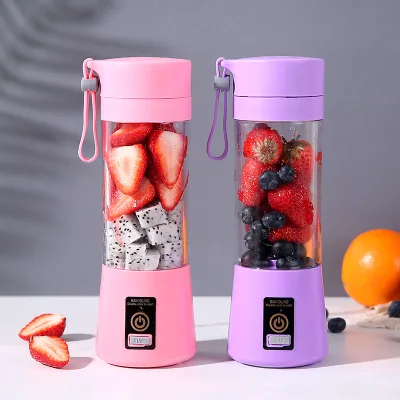


Comprehensive Sourcing Guide
Portable Rechargeable Electric Juicer Sourcing Guide
Sourcing portable rechargeable electric juicers requires a nuanced understanding of the intersection between consumer electronics and kitchen appliances. These devices are distinct from traditional countertop juicers due to their compact form factors, battery-powered operation, and often simplified mechanical designs. Buyers must navigate a market where specifications vary significantly between models, ranging from basic centrifugal units to more complex grinding and mixing devices. The core value proposition for these products lies in their convenience and portability, making them suitable for travel, office use, or small household spaces. However, this convenience introduces specific technical and compliance challenges that procurement teams must address before finalizing supplier agreements.
The procurement landscape for these items is characterized by a wide range of product attributes and commercial terms. Observed data indicates a diverse inventory with prices ranging from $0.10 to $16.99 USD and minimum order quantities (MOQs) spanning from 10 to 5,000 units. This variability suggests that buyers can find options for both niche sampling and large-scale distribution. However, the lack of uniformity in specifications means that a "one-size-fits-all" approach to sourcing is ineffective. Each potential supplier may offer different combinations of motor power, battery capacity, blade configurations, and housing materials. Therefore, the initial phase of sourcing must focus on clearly defining the technical requirements that align with the target market’s expectations for performance and durability.
Product Scope and Observed Listing Signals
The product scope for portable rechargeable electric juicers encompasses a variety of functional types, primarily centered around centrifugal juicing and multi-purpose grinding. Listings indicate the presence of centrifugal juicers with automatic pulp ejection and reverse functions, which are designed for efficiency and ease of cleaning. Additionally, there are models categorized by their ability to grind, mix, puree, and shred, suggesting a broader utility beyond just juice extraction. These devices often feature USB rechargeability, with battery capacities observed at 1500mAh and 1000mAh, and charging times as short as one hour. The housing materials vary between plastic and glass, indicating different price points and aesthetic preferences in the market.
Observed listing signals reveal significant variation in technical specifications that buyers must carefully evaluate. Motor speeds (RPM) range from 12,000 to 28,000, which directly impacts the efficiency of juice extraction and the texture of the output. Power ratings are listed in both watts and volts, with observations of 60W at 5V, 30W at 5V, and other configurations up to 200W. Voltage inputs vary, with some models operating at 3V or 5V, while others accept up to 30V. Capacity is another critical differentiator, with observed volumes ranging from 380ml/400ml to 500ml. Buyers should note that these figures are observations from specific listings and may not represent the entire market; verifying these specs with individual suppliers is essential to ensure they meet the intended use case.
Technical Specifications to Verify
When evaluating technical specifications, the motor and blade configuration are paramount for determining performance. Buyers should verify the number of blades, which can range from 2 to 6, as this affects the fineness of the pulp and the overall extraction yield. The RPM rating is a key indicator of power; higher speeds like 28,000 RPM may offer faster processing but could generate more heat or noise. It is crucial to confirm whether the motor is designed for continuous operation or short bursts, as this impacts the device's longevity. Additionally, the power source and battery life must be aligned with the target user’s needs. USB rechargeability is a standard feature, but the actual runtime per charge and the type of charging cable included should be explicitly stated in the product datasheet.
Housing material and capacity are equally important for user experience and safety. Plastic housings are common and offer durability and lightweight portability, while glass housings may provide a premium feel but are more fragile. The capacity of the juicer, whether 380ml, 400ml, or 500ml, should match the intended serving size. Buyers must also verify the cleaning mechanisms, such as whether the components are dishwasher safe or require manual cleaning. The presence of features like automatic pulp ejection and reverse functions can significantly enhance usability, but these features must be tested for reliability. Furthermore, the physical dimensions of the product, often listed in packing standards like 8x8x22 cm, are critical for logistics planning and retail shelf space allocation.
Compliance and Safety Documentation
Compliance with regional safety standards is non-negotiable for portable electric juicers, particularly those involving high-speed rotating blades and electrical components. Certifications such as CE and RoHS are frequently observed in listings, indicating adherence to European health, safety, and environmental protection standards. However, buyers must verify the validity of these certifications with the issuing bodies, as counterfeit documentation is a risk in the global supply chain. For markets like the United States, UL or ETL certifications may be required, while other regions may have specific electrical safety regulations. The voltage ratings of the devices, which can range from 3V to 5V or higher, must match the electrical infrastructure of the target market to prevent safety hazards.
Documentation should also cover material safety, especially since the juicer comes into direct contact with food. Buyers should request material safety data sheets (MSDS) for the plastic or glass housing and the blades, which are often made of stainless steel. These documents confirm that the materials are food-grade and free from harmful substances like BPA or lead. Additionally, the battery safety is a critical concern; lithium-ion or lithium-polymer batteries must comply with UN38.3 standards for transportation and IEC 62133 for safety. Buyers should ensure that the supplier provides test reports for these components, particularly if the products are being shipped internationally, where battery regulations are strictly enforced.
Cost Drivers and Commercial Terms
The cost of portable rechargeable electric juicers is influenced by several factors, including the complexity of the motor, the quality of the battery, and the materials used in the housing. Higher RPM motors and larger battery capacities typically command higher prices. The inclusion of additional features like automatic pulp ejection, reverse functions, or multiple blade configurations also adds to the manufacturing cost. Buyers should analyze the price range of $0.10 to $16.99 USD to understand the value proposition of different models. Lower-priced items may have simpler mechanisms or lower-quality components, while higher-priced items may offer better durability and performance.
Commercial terms such as MOQ and lead time are critical for inventory planning. MOQs ranging from 10 to 5,000 units allow for flexibility, but buyers must consider the storage costs and cash flow implications of larger orders. Lead times of 15-45 days are common, but this can vary based on the supplier’s production capacity and the complexity of the order. Buyers should negotiate clear terms for customization, such as logo printing or packaging changes, as these can affect both the cost and the lead time. Additionally, payment terms should be structured to mitigate risk, with a portion of the payment tied to the successful completion of quality inspections before shipment.
Supplier Qualification and Quality Control
Supplier qualification is the first line of defense against quality issues. Buyers should conduct thorough due diligence on potential suppliers, verifying their business licenses, production capabilities, and past performance. Factories with experience in producing small appliances are preferable, as they are likely to have established quality control processes. It is also important to assess the supplier’s ability to provide consistent product quality across batches. This can be done by requesting samples and conducting independent testing to verify specifications such as RPM, battery life, and material safety.
Quality control measures should be implemented throughout the production process. Pre-production inspections can verify that raw materials meet the specified standards, while in-line inspections can catch defects early in the manufacturing process. Final random inspections (FRI) are essential before shipment to ensure that the products meet the agreed-upon quality criteria. Buyers should define clear acceptance quality limits (AQL) for critical attributes like blade sharpness, battery performance, and housing integrity. Additionally, suppliers should be required to provide a warranty or guarantee against defects, which incentivizes them to maintain high quality standards.
Long-Term Procurement Checks
Long-term procurement success depends on continuous monitoring of supplier performance and market trends. Buyers should establish key performance indicators (KPIs) to track supplier reliability, including on-time delivery rates, defect rates, and responsiveness to issues. Regular audits, whether on-site or virtual, can help identify potential problems before they escalate. It is also important to stay informed about changes in regulatory requirements, such as new battery safety standards or material restrictions, to ensure ongoing compliance.
Feedback from end-users is a valuable tool for improving product quality and design. Buyers should collect and analyze customer reviews and complaints to identify common issues, such as battery degradation or blade dullness. This feedback can be used to negotiate improvements with suppliers or to develop new product iterations. Additionally, buyers should diversify their supplier base to mitigate risks associated with single-source dependencies. Building strong relationships with multiple suppliers can provide flexibility in sourcing and better negotiation power. Finally, staying updated on technological advancements in portable juicers, such as more efficient motors or longer-lasting batteries, can help buyers remain competitive in the market.
FAQs
What certifications do these juicers have?
The products hold CE, GS, and RoHS certifications. Some models also carry CE and RoHS marks. These certifications indicate compliance with safety and environmental standards for international markets.
Can I customize the logo on the device?
Yes, customization is available for the product logo. Buyers can request specific branding to be applied to the housing or packaging. This service allows for unique product identification.
What is the battery capacity of the unit?
Battery capacities vary between 1000mAh and 1500mAh depending on the specific model. Some units feature a 1500mAh battery while others use 1000mAh. This affects runtime and charging frequency.
How fast does the motor spin?
Motor speeds range from 12000 RPM to 28000 RPM across different models. Specific units operate at 12000, 15000, 18000, or 28000 RPM. Higher speeds generally provide finer pulp ejection.
What is the lead time for orders?
The standard lead time is between 15 and 45 days. This duration covers production and preparation for shipment. Buyers should plan their inventory accordingly based on this timeframe.
Are the parts dishwasher safe?
Yes, certain functions like pulp ejection are designed to be dishwasher safe. This feature simplifies cleaning after use. Buyers should verify specific model instructions for full compatibility.
What is the charging method for these units?
The devices are USB rechargeable and operate on 5V or 3V power sources. Charging time is approximately one hour for compatible models. This allows for convenient power replenishment anywhere.